
Loading...
Serving Victorville, CA and surrounding areas. (442) 219-3813
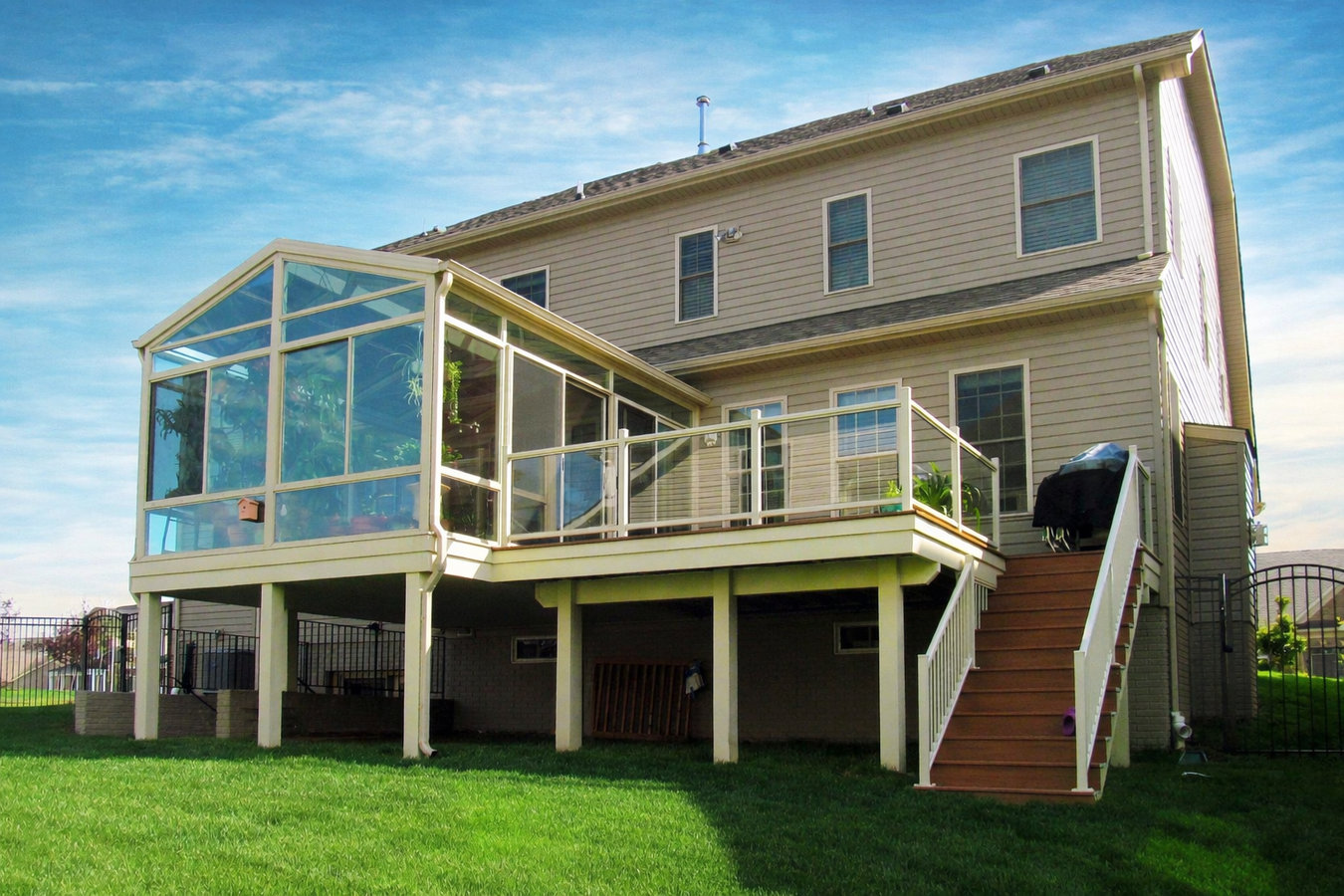
Your deck bakes in the Victorville sun from June through September and sits mostly unused for the rest of the year. A properly built sunroom conversion turns that dead outdoor space into a livable room - with real insulation, real windows, and a foundation engineered to last.
Deck-to-sunroom conversion in Victorville means removing the existing deck surface, reinforcing or replacing the structural foundation underneath, then enclosing the platform with insulated walls, low-e windows, and a weathertight roof - most projects take three to eight weeks of construction once permits are approved, plus two to four weeks for permit review.
A deck conversion is a more involved project than a patio conversion because the foundation almost always needs work. A deck built to hold patio furniture is not built to carry the weight of walls and a roof. Before any framing begins, we assess the posts, beams, and footings underneath and tell you exactly what needs to change. There are no mid-project calls asking for more money because we discover a foundation problem - we find those at the start. For homeowners coming from a concrete slab rather than a raised platform, a patio-to-sunroom conversion typically involves less foundation work and a shorter timeline.
The result is a room that adds genuine square footage to your home - the kind that shows up in an appraisal and counts when you sell - rather than an open deck that adds nothing to your listing.
If you walk past your back deck without stepping on it from late spring through early fall because it is simply too hot to use, you are losing the value of that outdoor space for nearly half the year. Victorville's summer highs regularly hit 105 to 110 degrees, and a deck with no shade or climate control becomes a no-go zone for months. A sunroom with proper glazing and cooling changes that - the space becomes usable on even the hottest High Desert afternoons.
Victorville's intense UV exposure and dry heat accelerate the breakdown of wood decking. Boards that are cupping, splitting, or soft underfoot are telling you the surface has reached the end of its useful life. Rather than replacing the decking with new boards that will face the same conditions, converting the structure into an enclosed room protects everything underneath from the elements going forward. If you are already facing a deck repair bill, the cost difference between repair and conversion may be smaller than you expect.
The Victor Valley is known for strong seasonal winds that carry fine desert grit - abrasive enough to scour exterior surfaces and coat every piece of outdoor furniture in a film of sand after a single windy afternoon. An enclosed sunroom with sealed frames keeps the dust out and the conditioned air in, so the space is comfortable when the wind picks up instead of being the most unpleasant place on your property.
Many Victorville homes built during the 2000s construction boom have open floor plans that leave no room for a home office or a dedicated quiet space. If you are working from home or just need a room that can be closed off, your existing deck footprint is often the most practical place to add that space. You are using structure you already own rather than starting a new foundation from scratch.
Every deck conversion starts with a structural assessment - we look at the posts, beams, and footings to determine what the foundation can support and what needs to change before walls go up. In Victorville, this step is not optional: the combination of intense UV, wide temperature swings between summer and winter, and High Desert wind puts real stress on structures, and a conversion built on a foundation that was not evaluated carefully will show problems within a few years. We walk you through our findings in plain language and explain your options before you commit to anything.
The enclosure itself can be built as a three-season room or a fully insulated, climate-connected four-season room. In Victorville, most homeowners choose the four-season option because a room that is unusable in July is not really earning its place in the house. If you want maximum year-round comfort, we also offer all season rooms that are fully tied into your home's heating and cooling system and insulated to the same standard as your interior living spaces. That option gives you a room that feels like a natural extension of your home rather than an addition you have to manage separately.
Best for homeowners whose existing deck structure needs upgrading before any enclosure work begins - we handle both phases as one coordinated project.
Suited to homeowners who primarily want to use the space in spring, fall, and mild winter months, and are working within a tighter budget.
The right choice for most Victorville homeowners - full insulation, low-e glazing, and HVAC connection for a room that is comfortable every day of the year.
Ideal for homeowners in Victorville's HOA-governed subdivisions - we prepare the documentation for both the city permit and the HOA architectural review.
Victorville's climate is genuinely difficult for outdoor structures. Summer temperatures regularly hit 105 to 110 degrees, winter nights can drop into the upper 20s, and the temperature swing between a summer afternoon and a winter night can exceed 80 degrees over the course of a year. That range puts real stress on caulk, seals, and expansion joints - materials that are not rated for this kind of thermal movement will crack and fail within a few years. The High Desert is also known for strong wind events, and a sunroom addition needs to be engineered for those loads, not just for appearance. Homeowners in Fontana and throughout the Inland Empire face similar thermal demands, but the Victorville elevation and desert conditions make the specifications even more critical here.
The City of Victorville requires permits and inspections for any structural addition, and many of the city's newer subdivisions are governed by HOAs with their own exterior modification requirements. A significant portion of Victorville's housing stock was built during the 2000s boom, and many of those neighborhoods - particularly in areas like Spring Valley Lake - have active HOAs. We handle both the city permit process and the HOA submission documentation, so you are not trying to navigate two separate approval processes on your own. Homeowners across the High Desert, including those in Hesperia, know that getting both approvals lined up correctly from the start is what keeps a project moving.
We ask about the size of your deck, whether you have an HOA, and what you want to use the room for. You do not need technical answers - just describe what you have. We respond within one business day and schedule a site visit at your convenience.
We visit your home to inspect the deck foundation, measure the space, and assess what reinforcement is needed before enclosure can begin. You get a written estimate with real line items - not a vague range - so you know exactly what the project involves and what it costs.
We prepare and submit plans to the City of Victorville's Building and Safety Division and, if applicable, your HOA. Permit review typically takes two to four weeks. We handle the back-and-forth and keep you informed so you are not chasing anyone for updates.
Structural reinforcement happens first, then framing, windows, and roofing. City inspections occur at key stages - that is normal and expected. When the room is done, we walk through it with you, confirm everything works, and hand over all permit documentation and warranties.
We assess the structure, explain what it needs, and give you a written price before you commit to anything - no obligation.
(442) 219-3813We evaluate the posts, beams, and footings under your existing deck before you sign anything. Decks built for furniture are not built for walls and a roof, and finding that out mid-project costs more than addressing it at the start. You get a clear picture of your foundation's condition and exactly what needs to change.
We prepare and submit the plans for the City of Victorville's building permit and assist with HOA architectural review documentation where required. Skipping either process creates legal and financial risk. We do not offer that option - we do it right the first time.
Low-emissivity glazing, thermally rated framing, and structural connections engineered for High Desert wind loads are standard on every conversion we build. The California Building Standards Commission sets the code minimum - we meet it and explain why each specification matters for your climate.
A quote given over the phone without a site visit is not a quote - it is a guess. Every estimate we provide is written, itemized, and based on an actual visit to your property. You know what you are agreeing to before any work begins, and there are no surprise line items when the project is done.
A deck-to-sunroom conversion is a meaningful investment, and the difference between a room that holds up for decades and one that starts showing problems within a few years comes down to the foundation assessment, the materials, and the permit process. We take all three seriously on every project.
All season rooms are fully insulated and climate-connected, making them a natural fit for homeowners who want year-round comfort after a deck conversion.
Learn MoreWorking from a ground-level concrete slab rather than a raised deck? A patio-to-sunroom conversion skips the foundation reinforcement stage.
Learn MorePermit slots fill up and construction timelines are longer than most homeowners expect - call or request a free estimate today to lock in your project start date.