
Loading...
Serving Victorville, CA and surrounding areas. (442) 219-3813
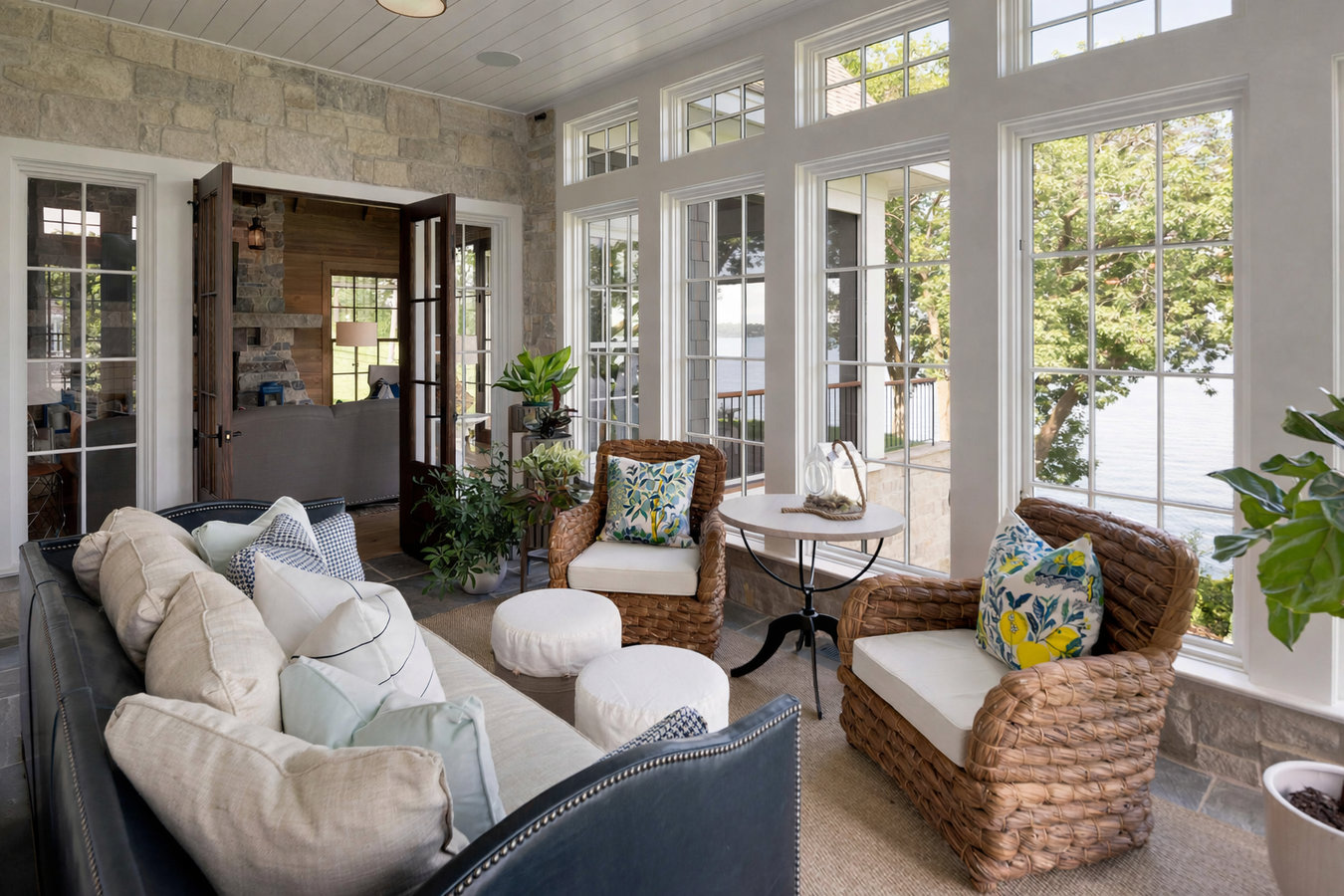
PatioLux Victorville Sunrooms designs and builds custom sunrooms, patio enclosures, and all-season rooms for homeowners in Upland, CA. We hold a current California contractor license and have worked on homes throughout the city - from the mid-century ranch homes near Euclid Avenue to the newer subdivisions up near the San Gabriel foothills - with free design consultations and complete permit management on every project.
Upland sits at the base of the San Gabriel Mountains, and its housing stock spans five decades of construction. The combination of clay soil, Inland Empire summer heat, seasonal Santa Ana winds, and foothill frost nights means that a sunroom here needs to be designed for more than mild weather. We specify glass and structure that perform across the full range of conditions Upland homeowners actually live with.
Upland's mid-century ranch homes near Euclid Avenue and its newer foothill-adjacent subdivisions need different design approaches - ranch homes benefit from low-profile designs that match existing roof pitches, while north Upland two-story homes often allow for second-story light wells or taller glass walls. Good sunroom design here starts with the house you have, not a catalog photo. Learn how we approach the design process on our sunroom design page to see how we approach design and pricing for this type of project.
Upland's housing stock spans five decades of construction, and each era has different structural starting points. A custom design accounts for your specific roofline, slab condition, setback, and HOA requirements rather than applying a standard kit to a non-standard situation. Homes near the historic Upland Train Depot area especially benefit from design that complements the existing architectural character of the neighborhood.
Many Upland ranch homes built in the 1960s and 1970s have existing covered rear patios with concrete slabs that are already most of the structure needed for an enclosure. Converting that footprint adds conditioned space at a lower cost than a new addition because the foundation, roofline, and overhead structure are already in place - an efficient path for homes where the patio is already deep enough.
Upland summers reach sustained highs above 100 degrees, and winter nights near the foothills regularly drop below freezing. An all-season room with low-e glass, proper insulation, and an HVAC connection stays usable through both. A three-season enclosure or basic screen room cannot bridge that range - if your home is in north Upland near the San Gabriel foothills, the temperature spread demands a fully conditioned solution.
Upland's UV index is high and summer lasts most of the year. Wood framing exposed to this level of sun and heat requires repainting and sealing every few years to prevent cracking and warping. Vinyl framing holds its color, does not absorb moisture from the occasional Upland frost, and maintains a consistent fit through temperature swings that pull wood joints apart over time - a lower-maintenance choice in this climate.
An uncovered Upland patio is unusable from late May through September - the slab surface temperature alone on a 105-degree afternoon can exceed 150 degrees. A solid aluminum or wood patio cover dramatically reduces surface heat and makes the outdoor space usable through spring and fall. It also protects any existing concrete from accelerated UV degradation and serves as a structural starting point for a future enclosure.
Upland is a city of about 80,000 people sitting at the foot of the San Gabriel Mountains, and a significant portion of its housing was built between the 1950s and 1980s. That puts a large share of the city's homes in the 40-to-70-year range - an age where concrete slabs have had decades of clay soil movement working against them, original stucco has been patched and repatched, and rooflines may have been modified from their original design. For any contractor attaching a new structure to these homes, understanding what is already there matters before a single measurement is taken. North Upland's newer subdivisions from the 1980s through early 2000s present a different picture - larger footprints, tile roofs, and in many neighborhoods, active HOA oversight that requires architectural approval before a permit is even submitted.
Climate in Upland is demanding by Inland Empire standards. Summer temperatures regularly reach 95 to 105 degrees from June through September, and the position at the base of the mountains creates localized wind channeling that accelerates material wear on exposed surfaces. Santa Ana events arrive each fall and can gust to 50 miles per hour through the foothill corridors, stressing roof connections and patio structures that were not designed for that kind of lateral load. Winter nights in the northern part of the city drop below freezing regularly, meaning any outdoor enclosure needs to handle the full range - not just the comfortable months in spring and fall. Expansive clay soils add a final layer: seasonal ground movement that cracks concrete, shifts footings, and works on stucco joints every year. Designing around all of this is what distinguishes a contractor who works in Upland from one who visits once.
Our crew works throughout Upland regularly and pulls permits through the City of Upland Building and Safety Department for residential sunroom and enclosure projects. The permit process in Upland is straightforward for standard residential additions, but HOA submissions in north Upland neighborhoods add a layer that needs to be started before - not after - the city permit application to avoid project delays.
Upland is bisected by Euclid Avenue, one of the most recognizable boulevards in the Inland Empire, lined with mature trees and framed by the neighborhood character that earned the city its long-standing nickname as the "City of Gracious Living." Homes near Euclid and the historic downtown area tend to be the oldest in the city - with the original Upland Train Depot on A Street at the center - while the newer subdivisions sit further north toward the foothills with Mount Baldy visible on the horizon. The Foothill Boulevard corridor along the southern edge of the city connects Upland to both Rancho Cucamonga and Ontario to the east and west.
We also serve homeowners in nearby Rancho Cucamonga just to the east, where the foothill conditions and housing eras overlap significantly with north Upland. If your project is on the border of these two cities or you are comparing options across both, we are familiar with the permitting and soil conditions on both sides.
We respond within 1 business day. We ask about your outdoor space, how you plan to use the new room, and whether your neighborhood has an HOA with architectural review requirements - so the site visit is already focused on what matters for your specific Upland property.
We come to your Upland home, measure the space, assess the existing slab or foundation, and review your setback situation. The written estimate includes design options and itemized costs and is delivered within one to two business days at no charge.
We prepare drawings and submit to the City of Upland Building and Safety Department. Plan check typically takes three to four weeks. We manage all communications with the plan check office and respond to any review comments without requiring your involvement.
Once permits are approved, we build on a schedule agreed at contract signing. A city inspector visits at each required phase. At close, we walk the finished room with you and deliver all signed permit paperwork so you can update your homeowners insurance coverage.
We serve all of Upland - from the mid-century neighborhoods near Euclid Avenue to the newer homes up by the foothills. The site visit and written estimate are free.
(442) 219-3813Upland is a city of roughly 80,000 people in western San Bernardino County, sitting directly at the base of the San Gabriel Mountains with Mount Baldy - the highest peak in the range - visible on the northern horizon. The city has carried the nickname "City of Gracious Living" for decades, a nod to its tree-lined streets, well-kept residential neighborhoods, and distinctly suburban character. Euclid Avenue runs north to south through the heart of the city and is one of the most recognizable boulevards in the Inland Empire, framed by mature trees and the homes of the city's older, established neighborhoods. The historic Upland Train Depot on A Street marks the center of the city's original downtown, where some of Upland's oldest homes are concentrated. The City of Upland borders Rancho Cucamonga to the east and Ontario to the south, both of which share similar climate conditions and Inland Empire character.
The housing stock in Upland reflects the city's growth across five decades. The core of the city - particularly the blocks near Euclid Avenue and the historic downtown - is dominated by single-story ranch homes built between the 1950s and 1970s on moderate lots with rear yards and concrete slab foundations. These homes represent the most common starting point for sunroom and patio enclosure projects in Upland. The northern part of the city, closer to the foothills and the border with Rancho Cucamonga, contains newer subdivisions from the 1980s through the early 2000s - larger homes, tile roofs, and often HOA-managed communities. Nearby San Bernardino to the east also shares much of this foothill-adjacent housing pattern and the same clay soil conditions that contractors need to account for throughout the region.
Stylish patio covers that provide shade and extend outdoor living.
Learn MoreWe design and build sunrooms for Upland homes on a schedule that works around your permit timeline. Call today or submit a request and we will respond within 1 business day.