
Loading...
Serving Victorville, CA and surrounding areas. (442) 219-3813
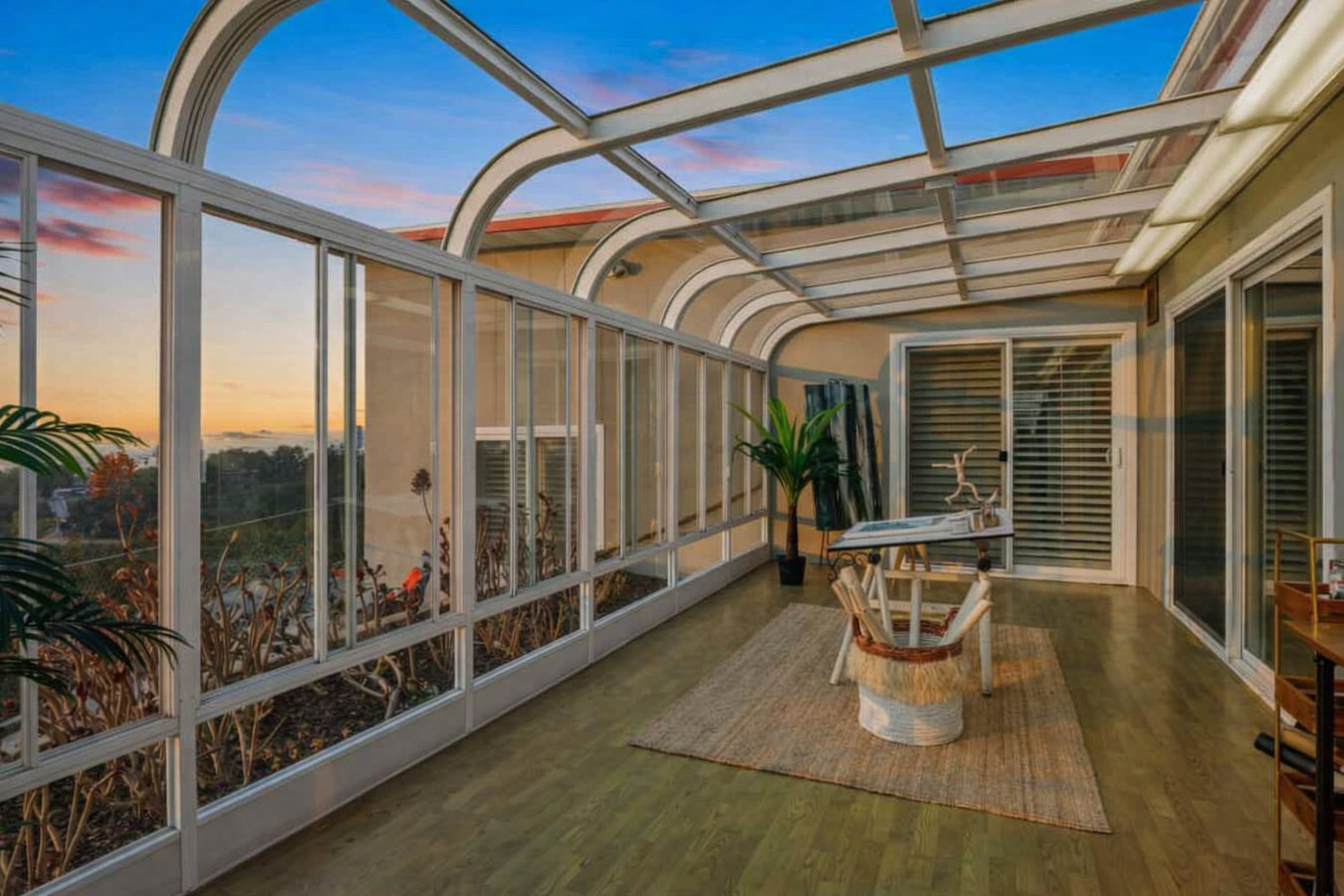
PatioLux Victorville Sunrooms builds solariums, custom sunrooms, and patio enclosures for homeowners in Redlands, CA. We hold a current California contractor license and serve properties throughout the city - from Victorian and Craftsman homes near the historic downtown to mid-century ranch homes and newer subdivisions on the east side - with free on-site estimates and complete permit management on every project.
Redlands has one of the most varied housing stocks in the Inland Empire, with homes spanning from the 1880s citrus-era builds through the present day. The city sits at about 1,300 feet elevation, which creates a slightly wider temperature range than lower Inland Empire cities - combining real summer heat with genuine winter frost. We design sunrooms that account for both ends of that range, with glass and structure specifications matched to how you actually plan to use the space.
Redlands has more sun per year than most Inland Empire cities, and its mix of older homes on larger lots creates opportunities for full glass solarium structures that would feel out of scale on smaller suburban lots. A solarium in Redlands can frame views of the surrounding hills and make the most of the city's light - but glass specification for this climate is critical. Poorly specified glass turns a solarium into an unusable greenhouse from June through September. Learn how we approach glass selection and structure on our solarium installation page to see how we approach glass selection and structure for this type of project.
Redlands has one of the most architecturally varied housing stocks in the Inland Empire - from Victorian-era properties near Kimberly Crest to Craftsman bungalows, mid-century stucco ranches, and newer tract homes on the east side. A custom design accounts for the character of your specific home rather than applying a standard kit that conflicts with the existing roofline, porch details, or historic fabric of the neighborhood.
Redlands mid-century ranch homes built between the 1950s and 1970s commonly have wide rear patios with existing concrete slabs and aluminum or wood overhangs that are already most of the structure needed for an enclosure. Converting that footprint into a fully enclosed space adds livable square footage at a lower cost than a new addition because the foundation, cover, and framing start point are already in place.
Redlands has generous lot sizes on many of its older and mid-century properties, giving homeowners room for a true sunroom addition off the rear or side of the house. Adding permitted square footage to a Redlands home increases its insured replacement value and market value - outcomes that depend on the addition being on the public permit record, which is standard on every project we complete.
Redlands sits at roughly 1,300 feet elevation, which makes winters slightly cooler than in the lower Inland Empire cities. Summer highs can still reach 105 degrees, and overnight lows in December and January regularly approach freezing. An all-season room with a proper HVAC connection and low-e glass stays functional across that full range - a meaningfully different result from a screen enclosure or three-season room that only works in the comfortable middle months.
Many Redlands homeowners want the feel of outdoor connection without committing to a full conditioned addition. An enclosed patio room with screened or operable glass panels provides shade, insect protection, and shelter from Santa Ana wind events during fall and winter, while still letting air through during the pleasant spring months when Redlands weather is at its best.
Redlands is unlike most Inland Empire cities in one important way: a meaningful share of its housing stock predates World War II, with Victorian and Craftsman homes still in use throughout the neighborhoods near the historic downtown, near the University of Redlands, and on the hillside streets approaching Kimberly Crest. Wood-frame homes from this era have construction characteristics that differ from modern stucco tract homes - different foundation types, different framing connections, and in some cases, historic designation that requires an additional layer of review before exterior changes are approved. The City of Redlands Historic Preservation program oversees changes to designated properties, and a contractor working in Redlands needs to understand when that process applies and how to navigate it alongside the standard building permit.
The climate here adds additional complexity. Redlands sits at approximately 1,300 feet elevation, which produces summer highs routinely above 100 degrees combined with genuine freezing temperatures in winter - a wider daily and seasonal range than most Inland Empire cities at lower elevation experience. The city is also in the path of Santa Ana wind events, which arrive from the northeast in fall and winter and can gust at damaging speeds through the local topography. Below the surface, expansive clay soils shift with each wet and dry cycle, stressing concrete slabs and foundation connections on properties of every age. Any sunroom contractor working in Redlands needs to account for all of this - not just the comfortable spring afternoons when the patio looks inviting.
Our crew works throughout Redlands regularly, pulling permits through the City of Redlands Building and Safety Division for residential sunroom additions, enclosures, and solarium projects. Redlands permit processes are standard for most residential additions, but homes in or adjacent to the historic district require early coordination with the preservation review process - starting that review before the building permit application, not after, is the step that prevents project delays in this city.
Redlands is a city with real local identity - the kind of place where residents know the streets and landmarks well. From the Victorian mansions near Kimberly Crest on the west side to the mid-century neighborhoods east of the University of Redlands campus, the housing stock changes noticeably across just a few miles. The I-10 freeway cuts through the southern edge of the city, connecting Redlands to the broader Inland Empire job corridor. We are familiar with properties on both sides of the freeway and throughout the residential neighborhoods north of downtown.
We also serve homeowners in nearby Victorville and throughout San Bernardino County. If you are comparing options across the region or your property straddles the boundary between Redlands and a neighboring city, we are familiar with the permitting offices and housing conditions on both sides.
We respond within 1 business day. We ask about your home, your existing outdoor space, and whether you have any concerns about historic review or HOA requirements - so the on-site visit is already focused on what matters for your specific Redlands property.
We come to your Redlands home, measure the space, assess the existing slab or foundation, and review the structural condition of any existing patio cover or overhang. If your home may be subject to historic review, we flag that at this stage. The written estimate follows within one to two business days at no charge.
We prepare drawings and submit the permit application to the City of Redlands Building and Safety Division. For homes requiring historic review, we coordinate with that process as well. Standard plan check takes three to five weeks. We manage all communications with the permit office and respond to any review comments.
Once permits are approved, we build on the schedule agreed at contract signing. A city inspector visits at each required phase. At project close, we walk through the finished room with you and deliver all signed permit paperwork for your insurance records and future property disclosure.
We serve all of Redlands - from the historic homes near downtown and Kimberly Crest to the stucco ranches and newer subdivisions on the east side. The site visit and estimate are always free.
(442) 219-3813Redlands is a city of about 73,000 to 75,000 people in San Bernardino County, sitting roughly 60 miles east of Los Angeles at about 1,300 feet elevation. Founded in the 1880s during the Southern California citrus boom, the city grew quickly through the early 1900s and still carries that history in its built environment - a larger concentration of Victorian and Craftsman homes than most Inland Empire cities, a walkable historic downtown with well-preserved brick buildings, and streets lined with mature trees that in some neighborhoods have been growing for over a century. Kimberly Crest, a Victorian mansion built in 1897 now open to the public, sits on a hillside on the west side of the city and is one of its most recognizable landmarks. The University of Redlands has anchored the city since 1907 and brings a stable, long-term resident population that invests in homeownership and property upkeep.
The housing stock in Redlands is genuinely diverse. The neighborhoods near the historic downtown and the university campus contain many of the oldest properties - wood-frame Victorians and Craftsman bungalows on larger lots with mature landscaping and older hardscape. Further east and into the city's newer subdivisions, the homes shift to stucco ranch houses from the mid-century era and larger two-story homes built in the 1980s and 1990s. All of these homes sit on the same expansive clay soils that cause ongoing concrete movement throughout the region. Nearby San Bernardino to the west and Rialto further west share these soil and climate conditions and are also part of our regular service area.
Stylish patio covers that provide shade and extend outdoor living.
Learn MoreWe build sunrooms for Redlands homes of every age and style - from historic properties near downtown to stucco ranches on the east side. Call today or submit a request and we will respond within 1 business day.